Businesses chasing huge keywords they realistically can't rank for.
At first, you might think keyword research is just finding search volume in a tool.
Actually, that's not quite right.
Keyword research is deciding:
- what people are searching
- why they are searching
- what Google expects to rank
- and whether targeting that keyword makes business sense for your website
That changes everything.
A keyword with 500 searches can make more money than a keyword with 20,000 searches. A low-volume local keyword can outperform a broad national keyword. A well-matched informational blog can bring more leads than a badly targeted service page.
This guide breaks down:
- keyword types
- search intent
- keyword research tools
- keyword difficulty
- topical authority
- and how to choose keywords that actually help SEO growth
If you're still figuring keyword research out, that's normal. Most guides either stay too basic or go too tool-heavy. The thing is, tools don't make decisions. You do.
And that's exactly what this guide is about.
What Keyword Research Really Means
Many people think keyword research means:
"Find keywords with search volume."
That's only one small part.
Real keyword research means understanding:
- what people search
- what type of page Google wants
- how competitive the SERP is
- whether the keyword matches your business
- and if the keyword deserves its own page
Let's think about this for a second.
If someone searches:
"what is local SEO"
they probably want:
- explanation
- examples
- learning content
But if someone searches:
local SEO agency Jaipur
the intent changes completely.
Now the user is comparing services or looking for a provider.
Same topic.
Different intent.
Different page type.
That's why keyword research is connected to business understanding, not just SEO tools.
Why Choosing the Wrong Keyword Hurts SEO
This is one of the biggest problems with business websites in India.
A company sees:
- high search volume
- competitor rankings
- trending topics
Then they create content without checking intent.
The result:
- intent mismatch
- higher bounce rate
- traffic comes but conversions don't
You'll be honest, this confuses many business owners.
They think:
The page is getting visitors, so why no leads?
Usually the keyword is the issue.
For Examples:
If a service page tries targeting for:
what is keyword research
But Google mostly ranks:
- blogs
- tutorials
- beginner guides
So the service page struggles.
Actually, you see this problem in many industries:
- clinics
- agencies
- local businesses
- SaaS websites
That's exactly why some websites get traffic but still struggle with business growth or real user. We explained this deeper in website getting traffic but no leads
The 4 Keyword Types You Should Understand
Not all keywords behave the same way.
And not all keywords need the same page type.
This had many beginners scratching their head for a while because they thought:
One keyword = one page
But keyword intent changes the entire content structure.
1. Informational Keywords
These keywords are used when people want knowledge.
Examples:
- how to choose the right keyword for SEO
- what is topical authority
- keyword research guide
- what is search intent
Google usually ranks:
- blogs
- tutorials
- guides
- educational pages
Best Page Type
Blog article
Examples:
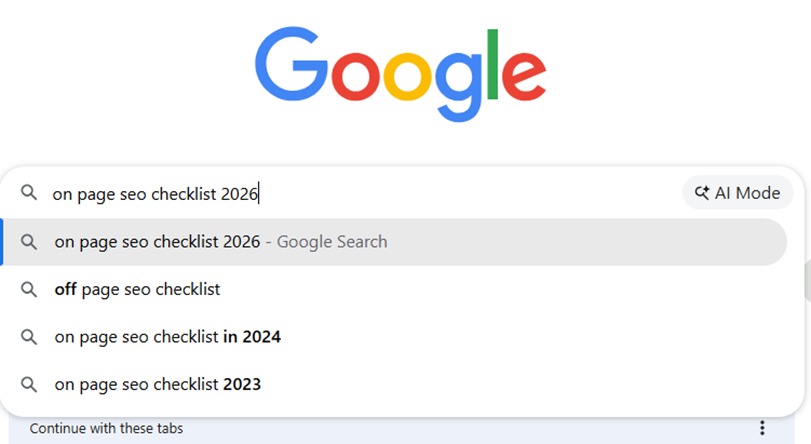
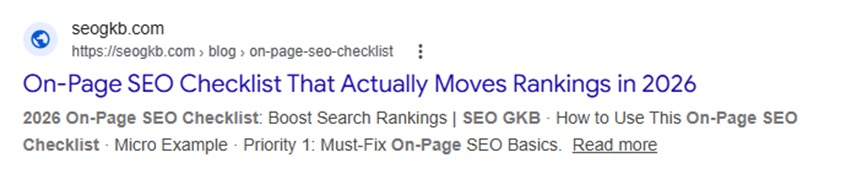
Examples:
on page seo checklistgoogle maps ranking factors explained
2. Commercial Keywords
These keywords show comparison or consideration intent.
The user is researching before taking action.
Examples:
- SEO services in Jaipur
- local SEO agency
- SEO consultant India
- keyword research service
Google often ranks:
- service pages
- agency pages
- comparison pages
Best Page Type
Service page
3. Transactional Keywords
These keywords show direct action intent.
The user wants to:
- hire
- buy
- contact
- book
Examples:
- SEO consultation
- get SEO audit
These keywords often convert best.
Best Page Type
Landing page or service page
4. Navigational and Branded Keywords
These searches happen when users already know the brand.
Examples:
- SEO GKB blog
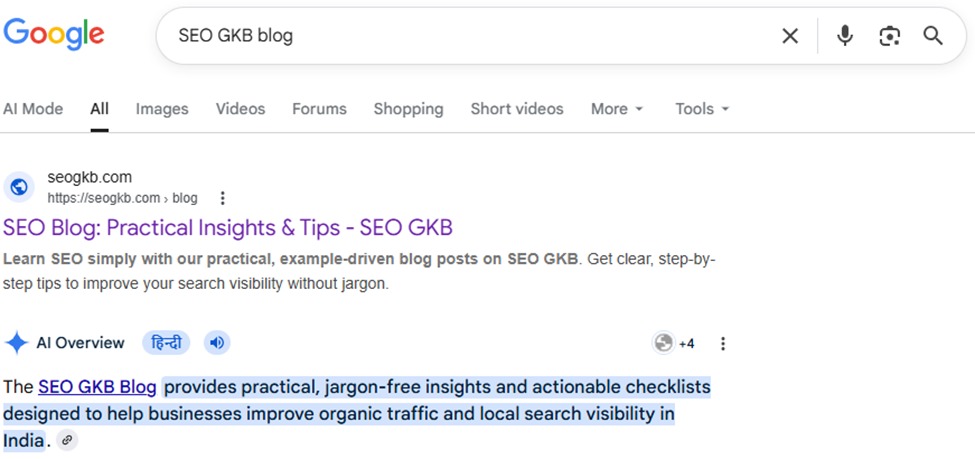
Google usually ranks:
- homepage
- about pages
- brand pages
These keywords matter because they build:
- brand recognition
- trust
- topical association
How Search Intent Actually Works
Search intent is the reason behind the search.
Google's entire ranking system depends heavily on intent matching.
You might create the best article on the internet, but if the page type doesn't match intent, rankings become difficult.
That's the part many keyword guides skip.
Informational Intent
The user wants to learn.
Google ranks:
- guides
- tutorials
- blogs
Example:
how keyword research works
Commercial Intent
The user is researching providers or options.
Google may rank:
- agency pages
- comparison pages
- service pages
Examples:
"best SEO agency Jaipur"
Transactional Intent
The user wants action.
Examples:
- hire SEO expert
- SEO audit service
- book SEO consultation
Google often ranks:
- landing pages
- conversion-focused pages
Navigational Intent
The user already knows the destination.
Examples:
SEO GKB CONTACT
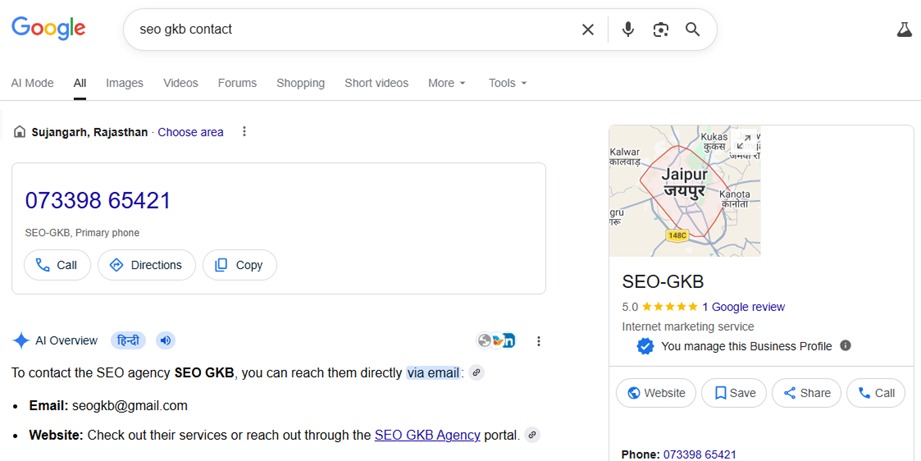
Google understands the search is brand-focused.
Keyword Research Tools and What They Actually Help With
Tools don't choose keywords for you.
They provide signals.
You're still making the final decision.
And honestly, beginners sometimes trust tools too much. A keyword difficulty score alone doesn't decide whether you should target a keyword.
Let's go tool by tool.
1. Google Search Console
Google Search Console is one of the most practical keyword research tools.
Because the data is real.
Not estimated.
You can see:
- impressions
- clicks
- CTR
- keywords already ranking
- hidden opportunities
This helps identify:
- keywords you already appear for
- pages with low CTR
- pages ranking on page 2
- content gaps
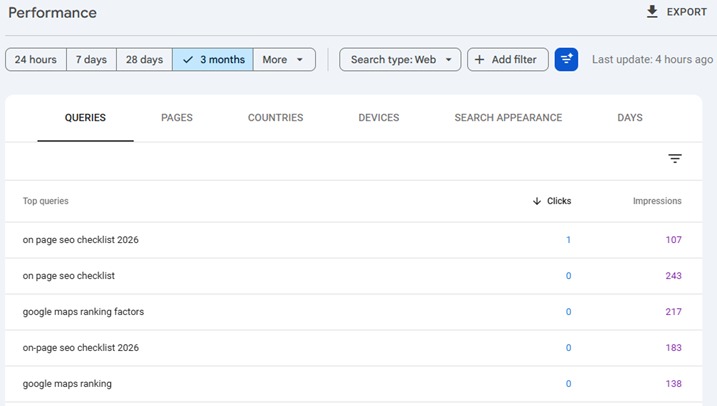
One thing many people miss:
Search Console often shows keyword opportunities you never intentionally targeted.
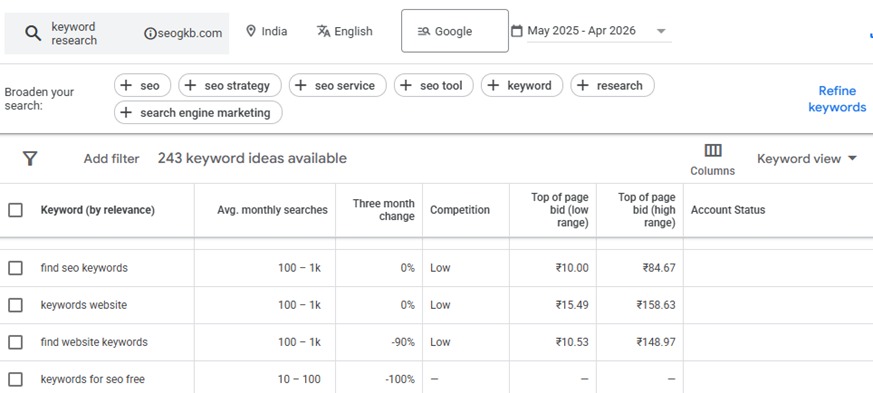
2. Google Keyword Planner
Keyword Planner is useful for:
- keyword expansion
- broad topic discovery
- commercial keyword ideas
- local SEO keyword research
It's not perfect for SEO volume accuracy, but it's still useful for understanding search patterns.
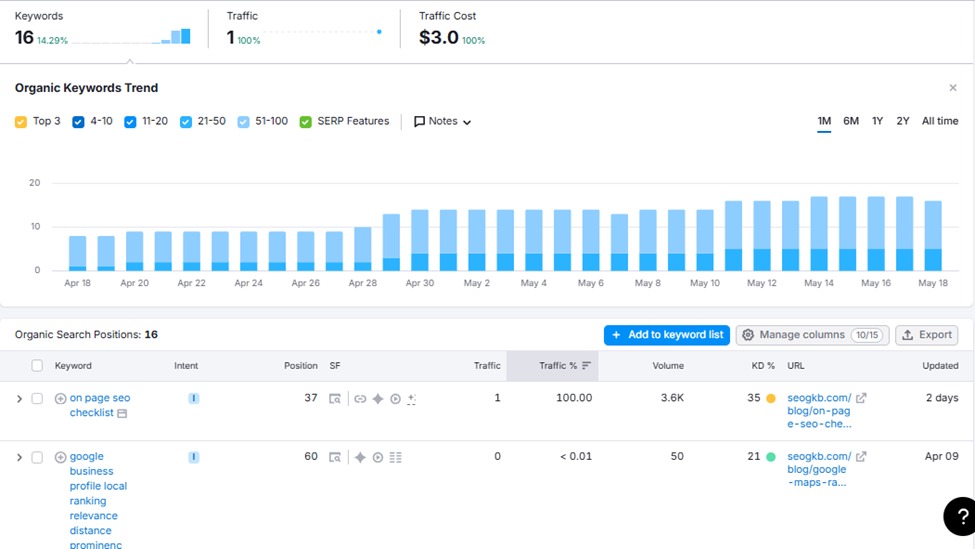
3. Semrush
Semrush is useful because it combines:
- keyword volume
- difficulty
- intent
- related keywords
- SERP analysis
- question keywords
This surprised many people because they initially treated Semrush as just a keyword tool.
Actually, the SERP overview section is one of the strongest parts.
It shows:
- what type of pages rank
- domain strength
- intent patterns
- content style
4. Ahrefs
Ahrefs is excellent for:
- SERP analysis
- click potential
- parent topics
- topical understanding
- ranking difficulty
One useful feature:
Parent Topic.
Because sometimes a keyword isn't the real topic Google understands.
That's where topical authority thinking starts.
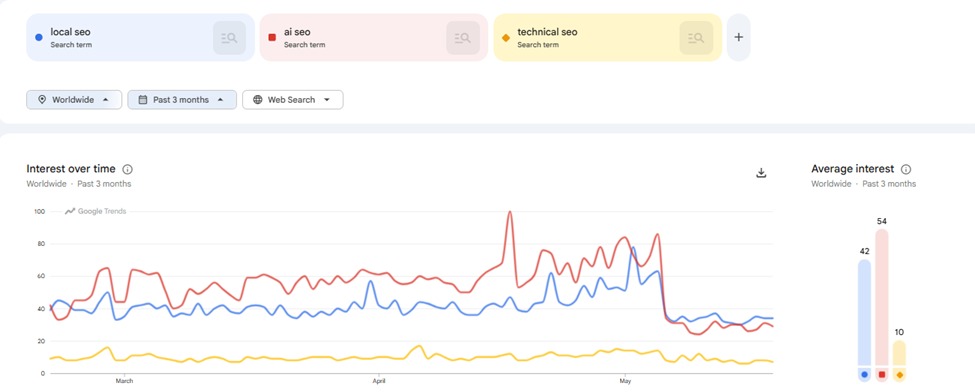
5. Google Trends
Google Trends helps you understand:
- rising searches
- declining topics
- seasonality
- regional interest
This matters more now because search behavior changes faster than before.
How to Choose the Right Keyword Step by Step
This is where keyword research becomes strategy.
Not just data collection.
Step 1: Check Relevance
Ask:
Does this keyword truly match my business or content?
If the answer feels weak, skip it.
A highly relevant keyword with lower volume usually performs better long term.
Step 2: Understand Search Intent
Look at the SERP carefully.
What type of pages rank?
- blogs?
- videos?
- service pages?
- forums?
Google already tells you what it wants.
Your job is matching that expectation.
Step 3: Analyze Search Volume
Search volume matters.
But not as much as beginners think.
Some low-volume keywords:
- convert better
- rank faster
- bring stronger leads
Especially in:
- local SEO
- B2B SEO
- service businesses
Step 4: Check Keyword Difficulty
Can your website realistically compete?
A new website targeting ultra-competitive keywords immediately usually struggles.
At first, you may think:
Higher volume means better opportunity.
But the competition level changes everything.
Smaller websites should usually start with:
- long-tail keywords
- lower competition topics
- intent-focused queries
Step 5: Check Business Value
This part gets ignored too often.
Ask:
If this keyword ranks, what happens for the business?
Possible outcomes:
- leads
- trust
- sales
- calls
- authority
- subscribers
Not every keyword deserves equal effort.
Step 6: Match the Correct Page Type
One of the most common SEO mistakes:
wrong page format.
Informational Keyword
→ Blog
Commercial Keyword
→ Service page
Transactional Keyword
→ Landing page
Navigational Keyword
→ Homepage or brand page
This sounds simple, but many websites still get this wrong.
Step 7: Analyze Your Ranking Chance
Look at:
- current SERP quality
- competitor authority
- content quality
- topical depth
Ask:
Can I create something genuinely more useful?
Not longer.
Not stuffed with keywords.
Actually useful.
What Happens When Intent and Page Type Do Not Match
This creates ranking or sometime indexing problems.
Wrong Match
Service page targeting:
what is keyword research?
Google expects:
- educational pages
- blogs
- beginner guides
Result:
poor rankings.
Correct Match
Blog targeting:
what is keyword research (answer based page)
Now the page matches user intent.
Another Example
Wrong:
blog targeting:
SEO services in Jaipur
Right:
service page targeting:
SEO services in Jaipur
Always align:
- keyword
- intent
- page type
Why Topical Authority Beats Random Keyword Targeting
Older SEO strategies focused heavily on:
one keyword = one page.
Google understands topics differently now.
One isolated page is usually not enough to build strong authority.
A better structure looks like this:
Pillar Page
Keyword Research Guide
Supporting Pages
- search intent guide
- keyword difficulty explained
- topical authority SEO
- local SEO keyword research
- SEO content strategy
- keyword clustering
The thing is Google wants signals that your website consistently covers a subject deeply.
That's why related articles help each other rank.
This is also why pages like:
should naturally connect through topic relevance.
Not because of "SEO tricks."
Because the topics genuinely relate.
Common Keyword Research Mistakes
Choosing Keywords Only by Volume
Traffic alone doesn't guarantee business growth.
Ignoring Intent
Wrong intent usually means:
wrong audience.
Not Checking the SERP
The SERP already shows:
what Google prefers ranking.
Targeting Too Many Intents on One Page
One page should usually focus on one dominant intent.
Ignoring Search Console Data
Many websites already rank for useful keywords but never optimize around them.
Publishing Random Topics
Without topical relevance, SEO growth becomes inconsistent.
The Final Keyword Selection Framework
Before targeting any keyword, check:
Relevance
Does it match your business?
Intent
What does the user want?
Search Volume
Is there enough demand?
Difficulty
Can you realistically rank?
Business Value
Will it help growth?
Page Fit
Should this be a blog or service page?
Topical Fit
Does this strengthen your authority?
If a keyword fails most of these checks, it's probably not worth prioritizing.
Final Keyword Research Checklist
Before publishing any page:
- ✅ Pick the seed topic
- ✅ Check the SERP
- ✅ Identify search intent
- ✅ Classify the keyword type
- ✅ Check volume and difficulty
- ✅ Match the keyword to the correct page type
- ✅ Add supporting topic pages
- ✅ Use natural internal links
- ✅ Recheck performance in Search Console
What to Do Next
Keyword research is not about building the biggest keyword list.
It's about choosing the right keyword.
The right keyword:
- matches intent
- fits the correct page type
- aligns with business goals
- supports topical authority
- and has realistic ranking potential
That's what sustainable SEO usually looks like.
If you’re unsure:
- what keywords your business should target
- what pages should be created
- how to structure your SEO strategy
- or why your current keywords are not performing
then you may need a proper keyword research strategy, not just another keyword export from a tool.
At SEO-GKB, we help businesses find keywords based on:
- search intent
- business relevance
- realistic ranking opportunities
- topical authority
- and long-term SEO growth
So if your SEO feels stuck somewhere, check out our keyword research and SEO services, or contact us to discuss the right strategy for your business.
Get a free SEO audit